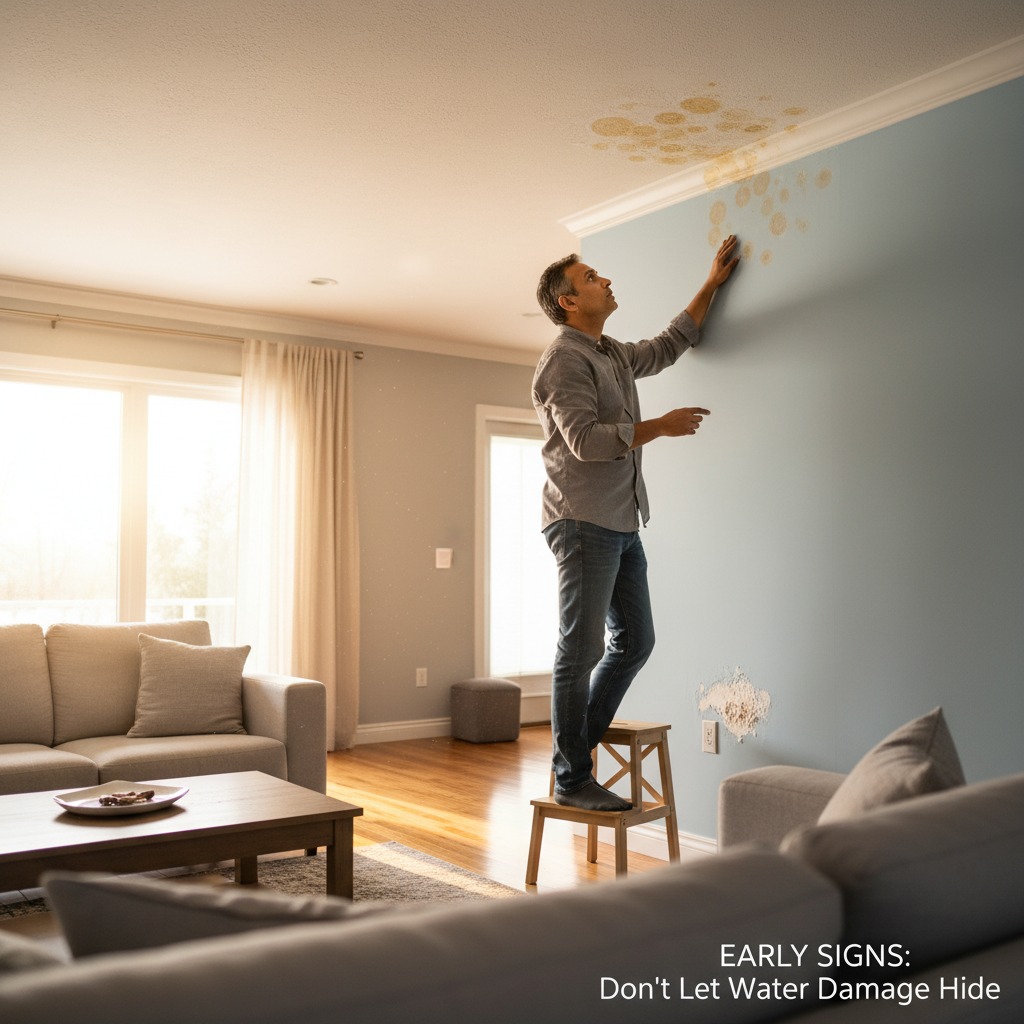
Most people imagine water damage as something dramatic—like a flooded basement or a pipe bursting in the middle of the night. But the truth is, a lot of water damage starts quietly and goes unnoticed for a long time.
In many homes, water slowly leaks behind a wall, under flooring, or inside the ceiling. Weeks or even months can go by before a homeowner realizes something is wrong. By then, the damage may already be more serious than it looks.
The good news is that hidden water damage usually leaves small clues. If you know what to watch for, you can catch the problem early and prevent it from turning into a much bigger repair.
Here are some of the most common signs homeowners notice when hidden water damage is starting to develop.
Strange Stains on Walls or Ceilings
One of the first things people notice is a stain that wasn't there before.
Water stains usually appear as yellow, brown, or slightly darker spots on a wall or ceiling. Sometimes they start small and slowly spread over time.
You might see them:
- On ceilings below bathrooms or kitchens
- Near windows or exterior walls
- Around vents or light fixtures
- In corners of rooms
Even a small stain can mean water is traveling somewhere behind the surface. It might be coming from a slow plumbing leak, a roof issue, or moisture building up inside the wall.
If you notice a stain growing or appearing out of nowhere, it's a good idea to take a closer look.
A Musty Smell That Won't Go Away
Sometimes you can smell a moisture problem before you ever see it.
If a certain part of your house has a damp or musty smell that never seems to go away, there may be hidden moisture somewhere nearby. This smell often happens when materials like drywall, wood, or carpet stay damp for too long.
People often notice these smells in places like:
- Basements
- Laundry rooms
- Bathrooms
- Crawl spaces
- Closets near plumbing
If the room smells damp but you can't see any obvious water, there's a chance something behind the wall or under the floor could be holding moisture.
Floors That Feel Warped or Uneven
Flooring is one of the first things in a home to react to moisture.
When water gets underneath flooring, it can cause materials to swell, shift, or warp. Sometimes it happens slowly enough that you don't notice it right away.
A few signs to watch for include:
- Hardwood floors that start to curve or "cup"
- Laminate flooring separating at the seams
- Soft spots when you walk across the floor
- Tiles that become loose or uneven
These changes often mean water has been sitting underneath the surface for a while.
Paint or Drywall That Looks Different
Walls can also show signs of hidden moisture.
If you notice paint starting to bubble, peel, or crack for no clear reason, water could be trapped behind the wall. Moisture weakens drywall and causes the surface to change shape over time.
You might see things like:
- Bubbling or blistering paint
- Wallpaper peeling away from the wall
- Drywall that feels soft to the touch
- Small cracks forming along seams
Even if it seems like a cosmetic issue at first, it's often worth checking to make sure moisture isn't the real cause.
A Water Bill That Suddenly Goes Up
Not all water damage is caused by storms or outside weather. Sometimes the problem is a slow plumbing leak hidden somewhere inside the home.
If your water bill suddenly increases but your water use hasn't changed much, it could be a sign that water is leaking somewhere you can't see.
Leaks like this sometimes come from:
- Pipes inside walls
- Under sinks
- Behind appliances
- Inside crawl spaces
- Beneath concrete slabs
Even a small leak can waste a surprising amount of water over time while slowly damaging nearby materials.
Mold Appearing Where It Shouldn't
Mold loves moisture. If mold starts showing up inside your home, there's almost always a water source nearby.
You might notice small dark spots forming on walls, ceilings, baseboards, or around vents. Sometimes mold also comes with that familiar musty smell many people recognize.
Mold can grow surprisingly fast—sometimes within a day or two after materials become damp. That's why it's important to figure out where the moisture is coming from instead of just cleaning the surface.
Areas of the Home That Always Feel Damp
Another common sign of hidden moisture is a space that just never seems to dry out.
If a room constantly feels humid or damp compared to the rest of your home, there may be water trapped somewhere nearby.
This often happens in places like:
- Basements
- Utility rooms
- Crawl spaces
- Rooms with plumbing or appliances
Over time, moisture in these areas can damage materials and create conditions where mold begins to grow.
Why It's Important Not to Ignore the Signs
It's easy to overlook small warning signs—especially if they don't seem urgent at the time. But water damage usually doesn't get better on its own.
Moisture can slowly weaken wood framing, drywall, flooring, and insulation. If mold starts growing, it can spread to other areas of the home as well.
Catching the issue early often makes repairs much easier and less expensive.
What to Do If You Think You Have Water Damage
If you notice any of these signs, it's a good idea to investigate sooner rather than later.
You can start by:
- Checking nearby plumbing for leaks
- Looking around appliances like washing machines or dishwashers
- Inspecting ceilings under bathrooms or kitchens
- Watching the area to see if stains or odors change
If you can't find the source, professional restoration teams have equipment that can detect hidden moisture behind walls and under flooring.
How Disaster Repair Team Helps Utah Homeowners
At Disaster Repair Team, we help homeowners throughout Utah deal with water damage problems—whether they're obvious or hidden.
Our team uses professional moisture detection equipment to locate water in places that are hard to see, like inside walls or beneath flooring. From there, we can remove the moisture, dry affected materials, and repair any damage that has occurred.
We provide services including:
- Water damage restoration
- Mold remediation
- Storm damage cleanup
- Fire and smoke damage restoration
- Sewage cleanup
When water damage happens, acting quickly can make a big difference in preventing further problems.
Don't Wait Until the Damage Gets Worse
Hidden water damage can be frustrating because it often develops slowly and quietly. But small signs—like stains, odors, or warped flooring—can be your home's way of telling you something isn't right.
If you catch the issue early, you may be able to avoid more serious repairs later.
If you suspect water damage in your home, Disaster Repair Team is here to help homeowners across Utah find the problem, fix the damage, and get their homes back to normal.