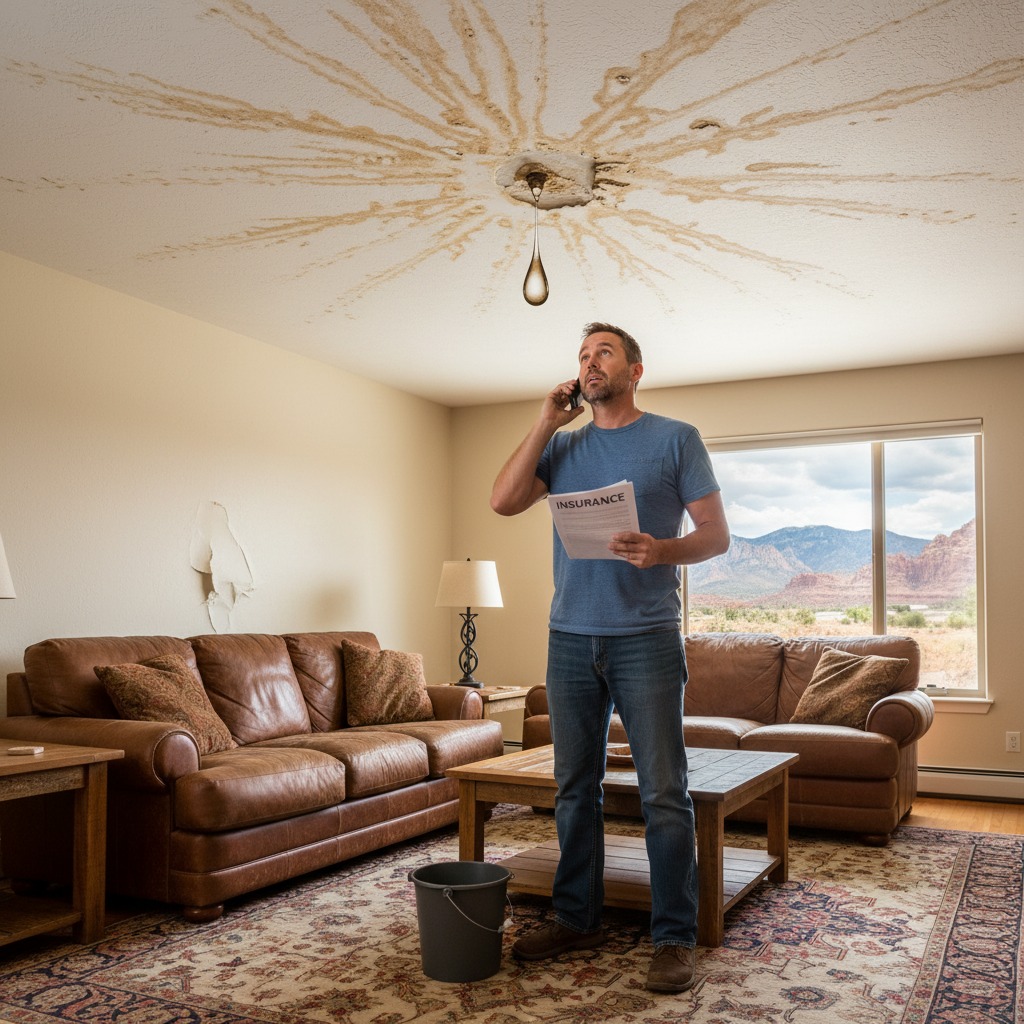
If water suddenly shows up in your home where it definitely shouldn't be—like dripping from the ceiling or soaking into your floors—there's usually a moment where everything kind of pauses and you think:
"Okay… how bad is this going to be? And is insurance going to help me here?"
Totally fair question.
The honest answer? Sometimes yes… sometimes no.
And yeah, that's not exactly the clarity most people are hoping for in that moment.
At Disaster Repair Team, we've helped a lot of homeowners across Utah deal with water damage, and this is one of the first questions that always comes up. So let's walk through it in plain English—no insurance jargon.
The Simple Way to Think About It
Here's the easiest way to understand how insurance usually looks at water damage:
- If it happened suddenly → it's often covered
- If it happened slowly over time → it's usually not
That one rule explains a lot of situations.
When Insurance Usually Does Help
There are quite a few cases where homeowners are covered—and honestly, this is where insurance can be a huge relief.
A Pipe Suddenly Bursts
This is one of the most common situations we see.
If a pipe breaks and water starts flooding your home out of nowhere, that's considered sudden damage. In most cases, insurance will help cover the cleanup and repairs.
An Appliance Decides to Betray You
Washing machines, dishwashers, and water heaters all have a way of failing at the worst possible time.
If one of them suddenly leaks and causes damage, that's usually covered too.
(Small note: insurance typically covers the damage, not the appliance itself.)
You Accidentally Overflow Something
Hey—it happens. You turn on the sink, get distracted, and come back to a small indoor lake.
As long as it's accidental and sudden, insurance will usually step in.
Storm Damage
If a storm damages your roof and water gets inside, that's generally covered as well.
When Insurance Usually Doesn't Help
This is the part that catches people off guard.
Slow Leaks
If a pipe has been leaking behind a wall for months and you didn't know about it, insurance may not cover the damage.
From their perspective, it's considered something that could've been caught and fixed earlier.
Mold From Ongoing Moisture
Mold that develops because of long-term moisture usually isn't covered either.
Water Seeping Into Your Basement
This is a big one in Utah—especially during spring.
If water slowly seeps into your basement from melting snow or heavy rain, it's often not covered under a standard policy.
That kind of situation may require separate flood coverage.
Maintenance Issues
If damage happens because something wasn't maintained—like a worn-out roof—insurance may deny the claim.
Why Spring in Utah Confuses Everyone
Spring is where things get a little tricky.
You've got melting snow, rainstorms, and saturated ground—all happening at once. Water starts showing up in places it hasn't before, and homeowners are left wondering:
"Is this storm damage… or is this something else?"
For example:
- A sudden leak from storm damage? → Probably covered
- Water slowly coming through your foundation? → Maybe not
That gray area is where a lot of confusion happens.
What You Should Do If Water Damage Happens
If you're dealing with water damage right now (or someday in the future), here's what actually helps.
Stop the Water If You Can
If it's coming from a pipe or appliance, shut it off as quickly as possible.
Take Photos (Seriously, Take a Lot)
Before anything gets cleaned up, document everything. This can make a big difference with insurance.
Call Your Insurance Company Early
Don't wait. The sooner they know, the better.
Bring in a Restoration Team
Water has a way of getting into places you can't see.
A professional team can find hidden moisture, dry everything properly, prevent mold, and help document the damage correctly.
Something Most Homeowners Don't Realize
A lot of people think they have to figure everything out on their own when dealing with insurance.
You really don't.
At Disaster Repair Team, we work with homeowners across Utah and help guide them through the process—not just the cleanup, but the whole situation.
That includes helping document the damage, working alongside insurance adjusters, and making sure nothing important gets missed.
Because let's be honest—this isn't something most people deal with often.
How Disaster Repair Team Helps
When something goes wrong in your home, it's not just about the damage—it's the stress, the confusion, and the "what do I do next?" feeling.
That's where we come in.
At Disaster Repair Team, we help Utah homeowners with:
- Water damage restoration
- Mold remediation
- Storm damage cleanup
- Fire and smoke damage restoration
- Sewage cleanup
Our goal is simple: fix the damage and make the process easier on you.
The Bottom Line
If you take one thing away from this, it's this:
- Sudden water damage → usually covered
- Slow, ongoing issues → usually not
And the faster you act, the better everything tends to go—both with your home and your insurance claim.
You Don't Have to Figure It Out Alone
If you're dealing with water damage and aren't sure what to do next, you're not the only one. Most homeowners haven't had to deal with this before.
The good news is—you don't have to guess your way through it.
Disaster Repair Team is here to help homeowners across Utah get things cleaned up, sorted out, and back to normal.